The team at Swan Dive Design Studio defines imaginative hospitality as creating spaces that inspire play, connection, and curiosity.
“It’s about designing environments that invite exploration—places where people can gather and feel a genuine sense of joy,” said Amanda Arguello, Partner. “We believe hospitality should be both thoughtful and dynamic, engaging guests through color and texture, while encouraging them to interact with the space and each other.”
One of the firm’s most recent projects: the 88,000-square-foot Relish Pickleball & Food Hall in Louisville, CO, is an example of imaginative hospitality brought to life, said Arguello.
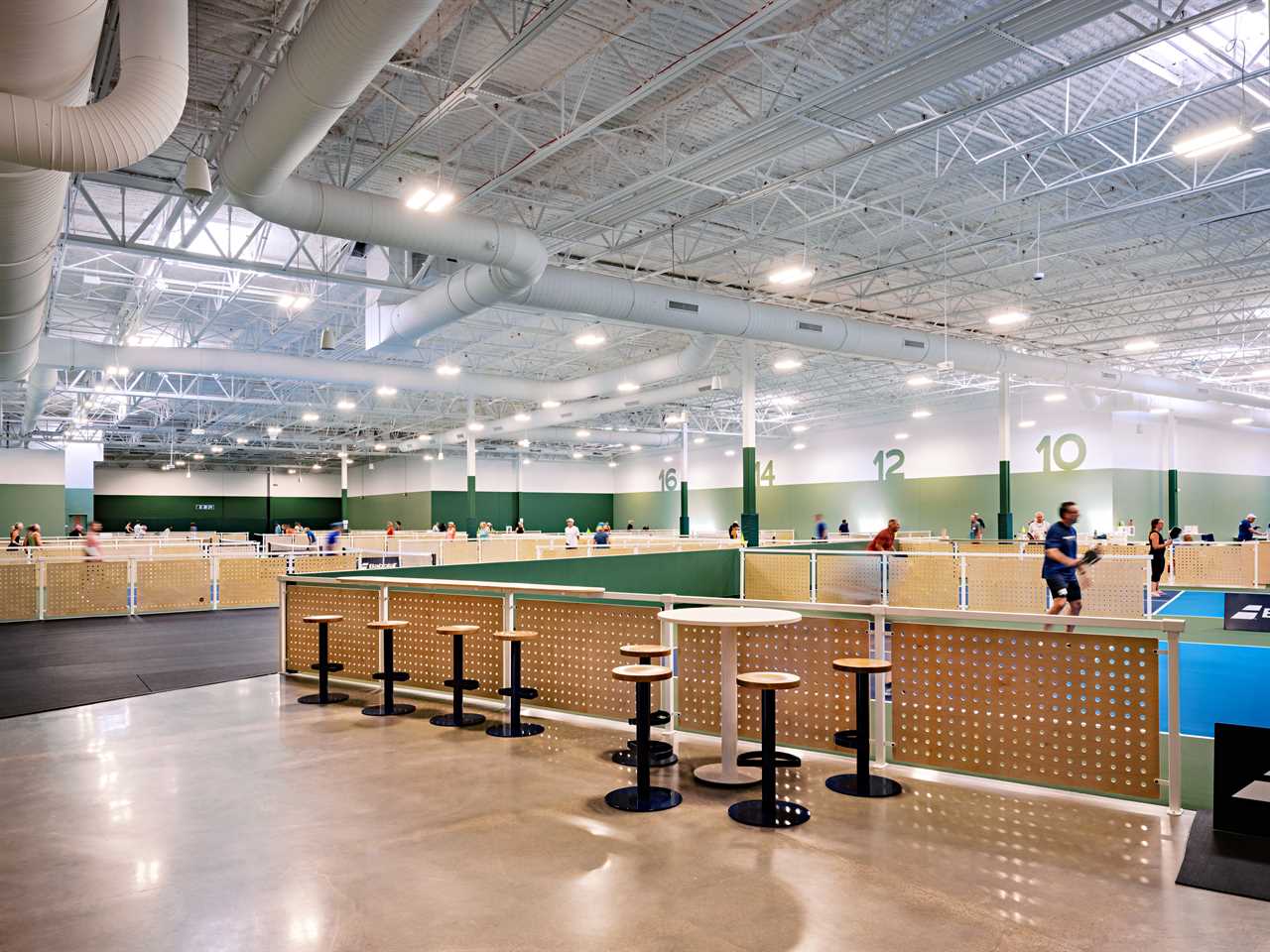
Blending recreation, dining, and community, the adaptive reuse project is housed within a former Sam’s Club. Relish features 19 indoor and two outdoor pickleball courts, eight locally driven food concepts, a coffee shop, full bar, conference areas, event spaces, an expansive outdoor patio, and a game lawn.
“It feels like the ultimate backyard,” said Arguello.”The goal was to create something truly multigenerational: a space that’s active and social yet still offers moments of intimacy, from date nights to private events. Relish embodies imaginative hospitality by combining so many forces: sports; food; design; and community to create an environment that feels inclusive and alive.”
For the food hall, the design team worked with every vendor to express their unique vision through a bespoke design.
“The ownership team’s decision to let each concept have its own identity made the environment even more vibrant and personal.”
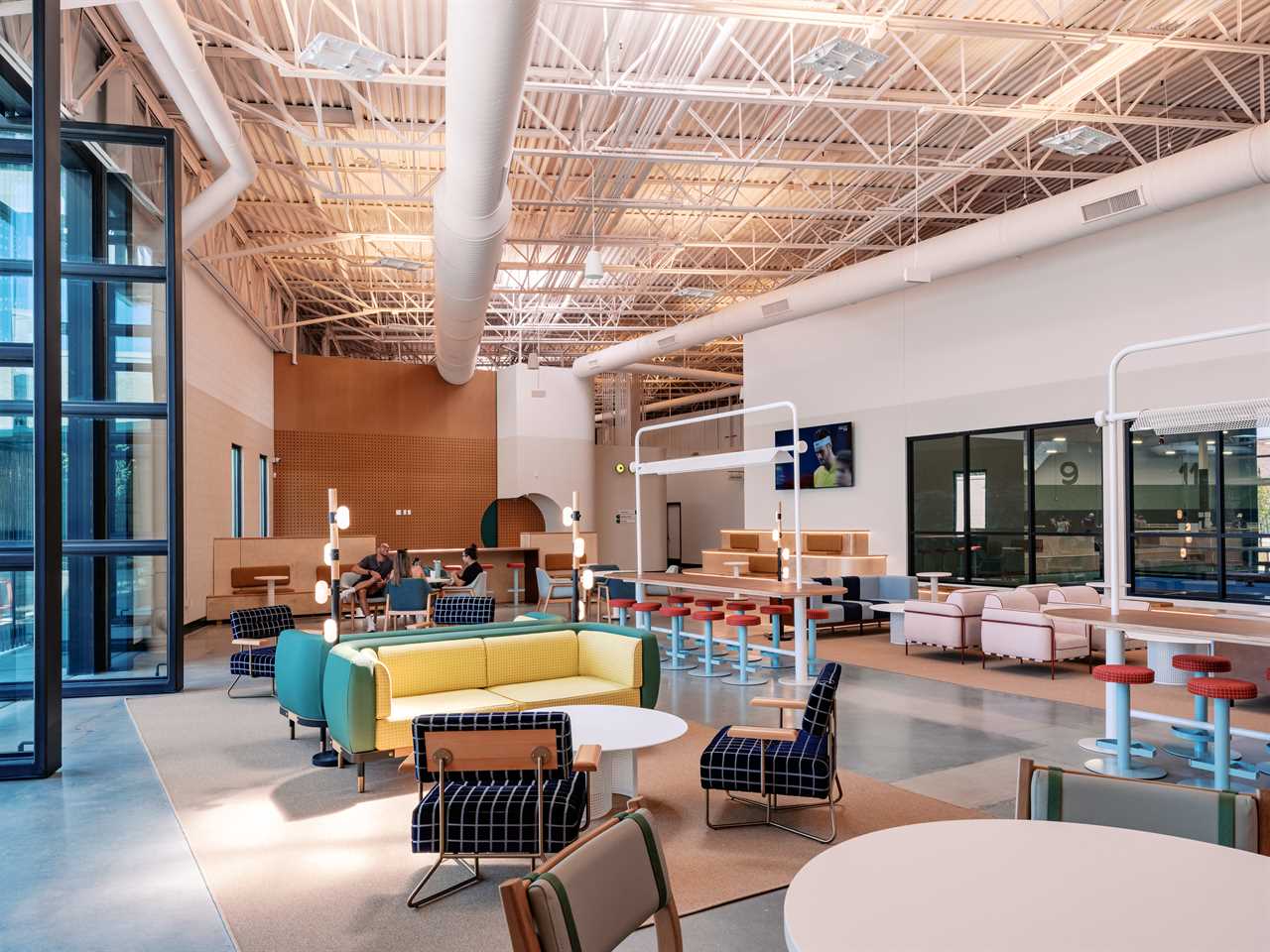
To create separate and distinct, but connected spaces for the pickleball and the food hall, the team started by thinking through the user experience from every angle, from a pickleball player to a diner or spectator. Acoustics were also a major consideration, Arguello explained, so they dedicated one side to pickleball and the other to the food hall with shared gathering zones in between.
“We mapped how each might move through the space, identifying natural points of transition, connection, and overlap. To bring all of these users together, we used glass strategically to create visual connections between the courts, communal spaces and the food hall. This allows energy to flow throughout while maintaining clear distinctions between the programs.”
With any adaptive reuse, there will be challenges, but the biggest one the team faced on the project was taking the cavernous, utilitarian warehouse and creating distinct spaces that felt warm and welcoming, Arguello explained. The existing warehouse had fixed columns, skylights and mechanical systems that limited how spaces could be laid out and enclosed.
“The exterior walls weren’t designed for large penetrations, but we saw this opportunity to connect the interiors with the outdoors. So, we came up with the idea of adding massive double-height glass-and-steel pivot doors to let people move freely between inside and out and invite more natural light inside. This became an engineering challenge, but the result is stunning. The new openings now lead to the landscaped exterior, formerly the loading dock area, and frame new views of the Flatirons.”
Another challenge was creating a welcoming atmosphere with multifunctional zones that still felt human in scale.
“Our approach was to embrace the existing obstacles and turn them into design features,” said Arguello. “Exposed ductwork was painted blush pink; skylights became key for a well-lit pickleball facility; and court placement was carefully mapped between structural columns. Like many adaptive reuse projects, these restrictions pushed our creativity, inspiring solutions we might not have explored if starting from scratch.”
Outside, they softened the building’s commercial look by adding dimensionality and a shade structure for outdoor dining as well as enhancing the CMU façade with perforated metal detailing to bring character and depth. Along with new landscaping and signage, these elements transformed a “big box” building into a welcoming destination within the Louisville shopping complex.
Warmth, movement and playful materiality were introduced in a number of ways with color as the starting point. They created a palette that feels energetic, happy and inviting, then balanced it with deeper tones, warm wood, and antique brass accents, said Arguello.
Movement came through shape and repetition. The interior architecture has curved walls, sculptural soffits, and integrated lighting details. They carved niches into walls and designed meandering millwork to form intimate seating moments and natural pathways, Arguello added.
Subtle nods to the sport of pickleball were included such as perforated metal furniture inspired by the ball’s pattern, grid-like tile and textile motifs echoing the court net, and circular forms that repeat throughout.
“We were equally thoughtful about texture and materiality, mixing textiles, metals and wood to create depth and tactility. Together, these elements bring the space to life, creating an environment that feels layered and full of personality.”
Arguello said the advantages of adaptive reuse projects lies in bringing new energy and purpose to spaces that already have a story It also pushes designers to be nimble and creative,
“We get to work with buildings that carry soul and history, layering the past with the present. There’s something deeply rewarding about being resourceful and breathing new life into a structure instead of tearing it down and starting over. Yes, these projects come with challenges and constraints, but those limitations often lead to the most beautiful and inventive solution.”
The project team included Engine 8, Dig Studio, RJA Engineers and Larson Structural, and was built out by Himmelman Construction.